

If your AC smells musty when it turns on, you’re not alone – especially in Houston. Houston’s humidity creates the perfect environment for mold, bacteria, and moisture buildup inside HVAC systems. Many homeowners assume a basic air duct cleaning will fix the issue, but in reality, the root cause is often deeper within the system. If you experience these symptoms, it means that your AC smells musty Houston and it’s time to take action. Addressing the factors that contribute to AC smells musty Houston can help maintain a healthier indoor environment. Furthermore, it’s crucial to understand that if your AC smells musty Houston, it can affect your overall comfort and health.
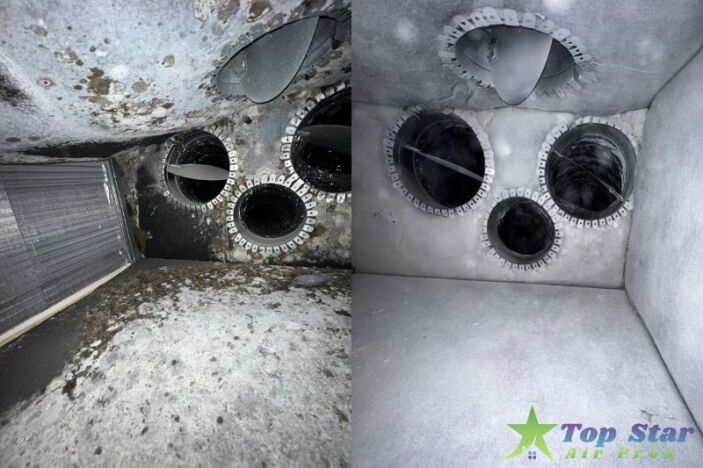
Why Your AC Smells Musty?
The most common causes include:
Understanding why your AC smells musty Houston is essential for effective maintenance.
- Mold growth inside air ducts or plenum box
- Dirty evaporator coil holding moisture
- High humidity levels in attic spaces
- Poor insulation causing condensation
In Houston, these issues are amplified due to constant moisture in the air.
Why Air Duct Cleaning Alone Doesn’t Fix It
Many companies offer cheap duct cleaning, but this only removes surface dust. If mold exists in the
system, the smell will return within days or weeks.
The real issue is usually:
- Inside the evaporator coil
- Inside the plenum box
- In the attic insulation or airflow design
Signs You May Have Mold in Your HVAC System
- Musty smell when AC first turns on
- Smell gets worse at night
- Allergy symptoms indoors
- Visible dust or dark particles around vents
What Actually Fixes the Problem
To fully eliminate the odor, a full system approach is needed:
- Professional mold remediation (licensed)
- Deep coil cleaning
- UV light installation to prevent future growth
- Attic insulation improvement
- Proper ventilation adjustments
When to Call a Professional in Houston
If the smell persists or returns quickly after cleaning, it’s time to bring in a professional. A proper
inspection should include ducts, plenum, attic, and airflow evaluation.
If you ever notice that your AC smells musty Houston, consider performing a thorough inspection to identify potential sources of the odor.
When treating musty smell in the HVAC and Ductwork system it is important to follow EPA mold guidelines and Energy efficiency or HVAC maintenance resources
How Houston Humidity Makes the Problem Worse
Houston’s climate plays a major role in musty AC odors. With high humidity levels almost
year-round, your HVAC system constantly deals with moisture. When warm, moist air passes
through a cold evaporator coil, condensation naturally forms. If the system isn’t properly maintained
or if airflow is restricted, that moisture doesn’t dry out—it sits and becomes the perfect breeding
ground for microbial growth.
This is especially common in homes with older ductwork, poor attic insulation, or systems that run
short cycles. Over time, even a small moisture issue can turn into a persistent odor problem that
keeps coming back no matter how many times you clean the vents.
The Role of Your Evaporator Coil and Drain Line
One of the most overlooked areas is the evaporator coil. This component is constantly exposed to
condensation, and if it becomes dirty, it traps moisture even more. A clogged drain line can make
things worse by preventing proper drainage, causing water to sit inside the system.
When this happens, the smell you notice is not just from ducts—it’s coming directly from inside the
unit. That’s why surface-level cleaning doesn’t fix the issue. A proper solution includes cleaning the
coil and ensuring the drainage system is fully clear and functioning.
Why Some Homes Keep Having the Same Issue
If you’ve already cleaned your ducts but the smell came back, the root problem was never solved.
Many homes in Houston have insulation or ventilation issues in the attic that create ongoing
humidity imbalance. Without addressing airflow and insulation, the HVAC system will continue to
collect moisture.
Preventing Musty Smells in the Future
Once the issue is fixed, prevention is key. Installing a UV light system can significantly reduce
microbial growth inside the unit. Regular maintenance, including coil cleaning and filter changes,
also plays a major role. Additionally, maintaining proper attic insulation and ventilation will help
control humidity levels and prevent the problem from returning.
Homeowners who take a full-system approach not only eliminate odors but also improve air quality,
energy efficiency, and overall comfort in their home.
If you’re experiencing musty smells from your AC, don’t wait. Top Star Air Pros offers full HVAC
inspections across Houston, identifying the real source – not just masking the problem.
Ignoring the signs that your AC smells musty Houston can lead to more significant problems over time.
Regular checks are important, especially if you live in Houston, where AC smells musty Houston during warmer months can become frequent.

